
Oracle’s Origins Hold Clues to Life’s Cycles
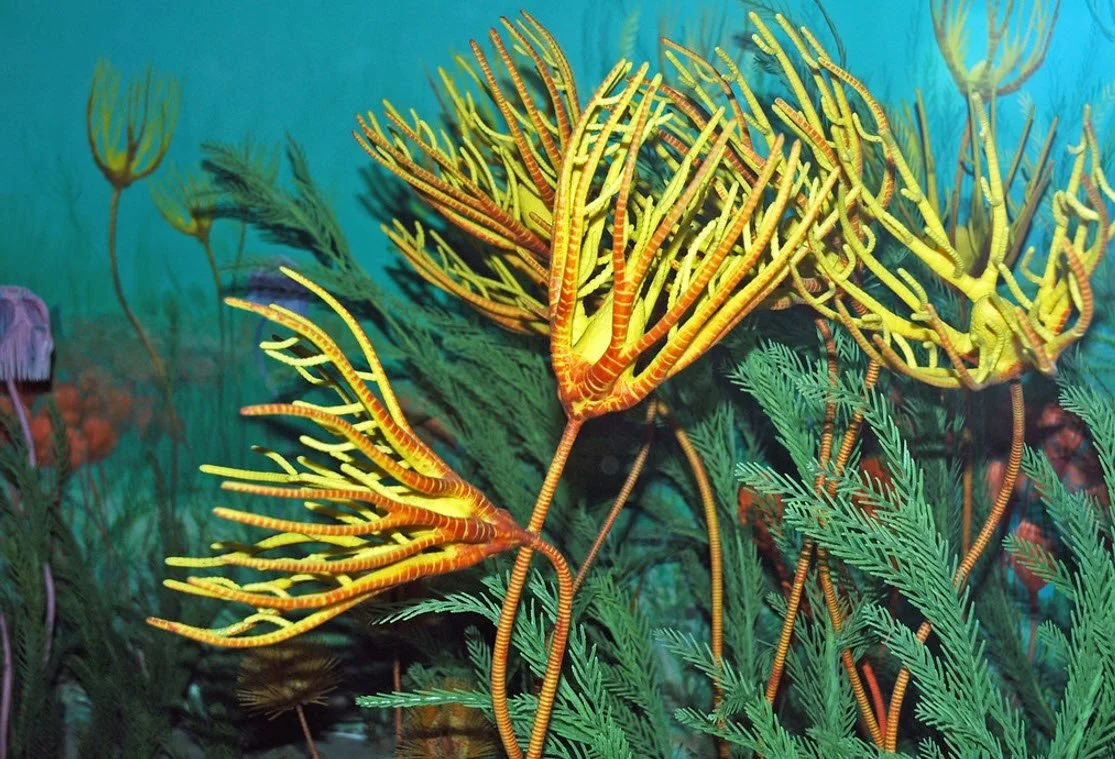
Crinoids
Our Earth has a complex history of climate change spanning hundreds of millions of years. Extended periods of glaciation, cooler temperatures, and lower sea levels have repeatedly cycled to warmer conditions, deglaciation, and rising seas throughout time. Oxygen and carbon dioxide levels have oscillated with climate change, providing environments for life to thrive and diversify, or, at other times, causing life to struggle or even cease to exist. The area surrounding Oracle captures life’s cycles in the exposed fossilized rocks.
The Village of Oracle is situated atop bedrock outcrops more than a billion years old. Some of this bedrock, namely the Apache Group, contains fossils that describe a world dominated by algae and bacteria. But wander a couple miles south of Oracle State Park, and your will cross the Mogul Fault of the Catalina Mountains which exposes the Escabrosa Limestone, a light gray sedimentary rock loaded with diverse marine creatures. It is estimated to be 320 to 350 million years old. Geologists call this time frame the Mississippian Period of the Paleozoic.
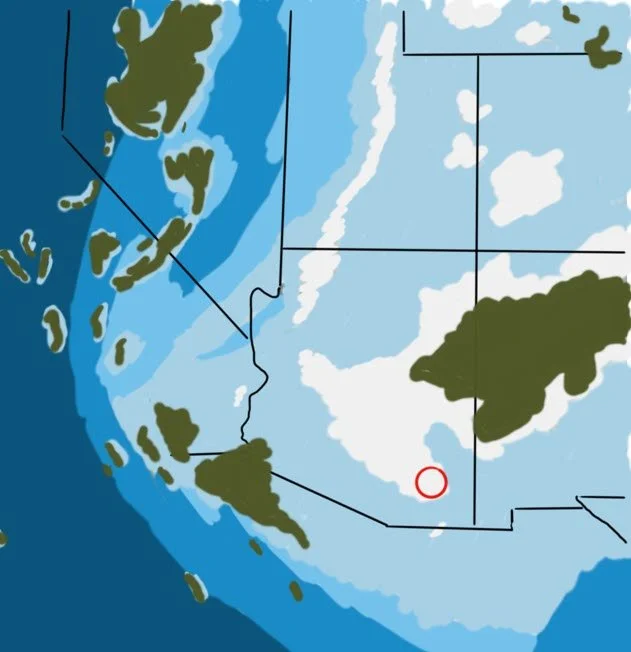
Map showing Oracle (red circle) near the equator as sea invaded
During the Mississippian, Earth’s tectonic plates were in motion, placing the proto-North American continent near the equator. The climate was warm, enabling the glacial ice of the southern polar region to melt, releasing large amounts of water. An inland sea rose, covering large swaths of equatorial North America, including Oracle.
The warm shallow sea, with clear waters, provided an ideal environment for certain marine life to flourish:
Crinoids, related to starfish and sea urchins, dominated the sea floor, forming expansive marine meadows.
Brachiopods, bi-valve shellfish, were common.
Solitary horn corals and colonizing rugose corals also existed but in fewer numbers.
This idyllic life-enabling marine climate lasted for nearly 30 million years.
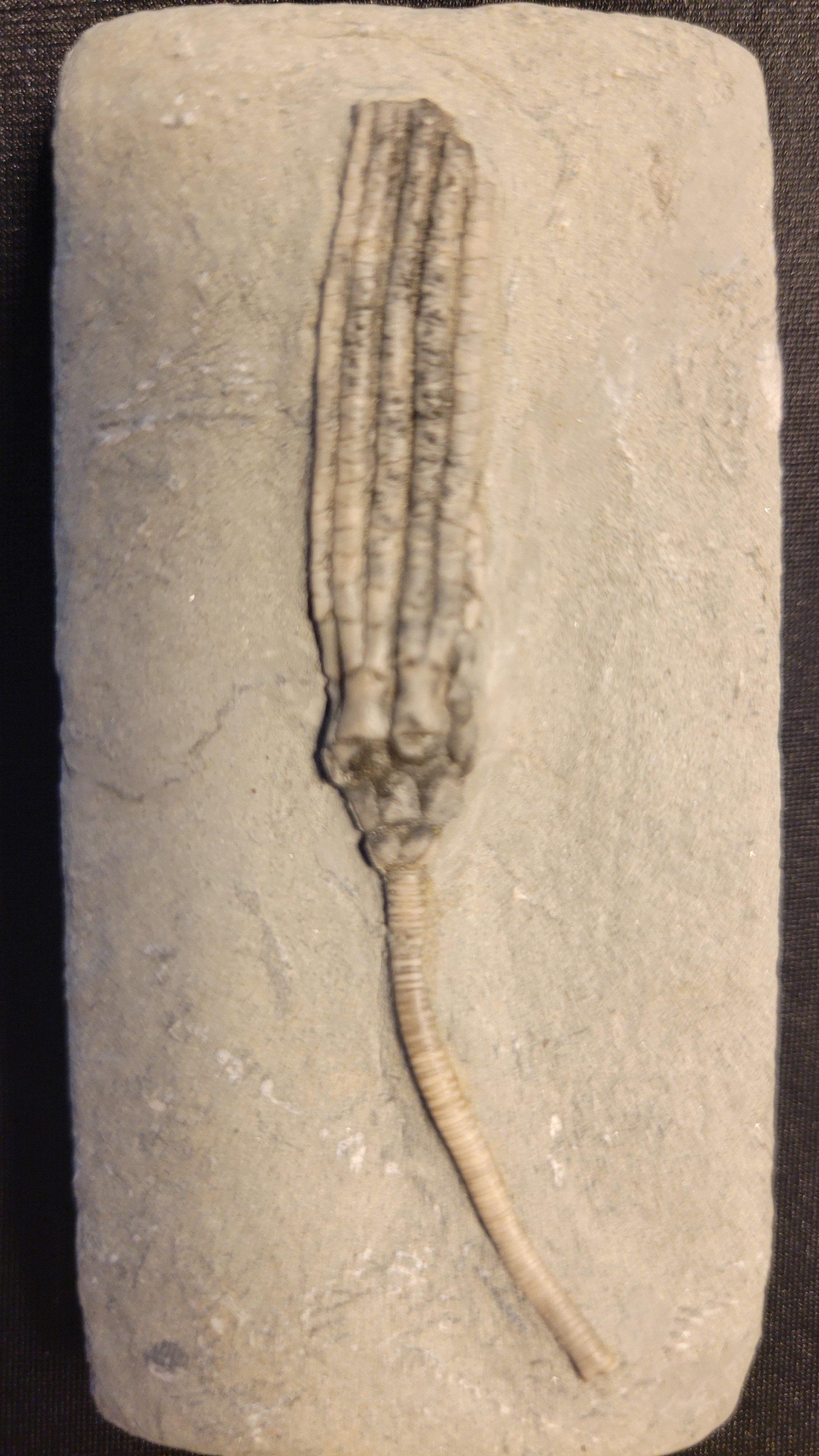


The Mississippian Period ended with one of earth’s many mass extinctions. Some have theorized that the inland sea receded as the North American continent was uplifted - as a result of collision with other continents. A diminished sea meant more competition for survival amongst the marine-dependent life forms. The once dominant crinoids were especially hard hit and driven to near extinction during this event.
The sea would again return later, but never to the extent of the magical Mississippian. As land now took the place of sea, new life forms inhabited the swamps, flood plains, and deserts. Forests of primitive conifers and ferns proliferated. Reptiles and amphibians evolved, while insects like dragonflies took flight with two-foot wingspans. Life again found a way to embrace new climates and geologic settings.
Oracle State Park offers visitors several ways to explore earth’s recycling past. We encourage you to join monthly geology tours, walk the self-guided geology trail, or peruse the rock, mineral and fossil collection at the visitor center. Additionally, Oracle State Park staff, assisted by the Friends of Oracle State Park, will soon release an online 360-degree virtual geology tour to enjoy at home.